Key Takeaways
P plates mark a supervised-to-independent transition, but the details are set by each Australian state and territory. The safest approach is to check the current official rules before every unfamiliar trip.
- P1 and P2 stages usually carry different restrictions, with P1 being the more demanding period.
- Passenger limits, night driving rules and vehicle restrictions vary between jurisdictions.
- Zero alcohol, correct P-plate display and strict mobile-phone rules are common themes.
- A licence may be recognised interstate, but local conditions can still affect a driver’s trip.
- Breaching a condition can lead to fines, demerit points, suspension and insurance complications.
How P plates work across Australia
P plates are part of Australia’s graduated licensing system. They give newly qualified drivers the freedom to drive without a supervising learner, while adding conditions intended to reduce risky situations. The phrase p plate restrictions by state matters because there is no single national rulebook covering every detail.
The difference between P1 and P2 licences
P1 is generally the first provisional stage after a driver passes the practical test. It tends to have tighter conditions around passengers, night driving and mobile-phone use, depending on the jurisdiction. P2 usually follows after a specified period and normally relaxes some, but not all, restrictions.
The name, colour, duration and conditions are not identical everywhere. A driver should read the licence information issued by the relevant road authority rather than assume that a friend’s P2 experience applies to them.
Why each state writes its own rulebook
State and territory governments administer driver licensing and road rules, so they decide how provisional drivers are managed locally. That is why a passenger restriction, speed condition or high-powered vehicle rule can look different across a border.
The differences are inconvenient, but they are not a loophole. A P-plater remains responsible for understanding the conditions attached to the licence they hold and the rules applying to the road being used.
Red, green and other P-plate colours explained
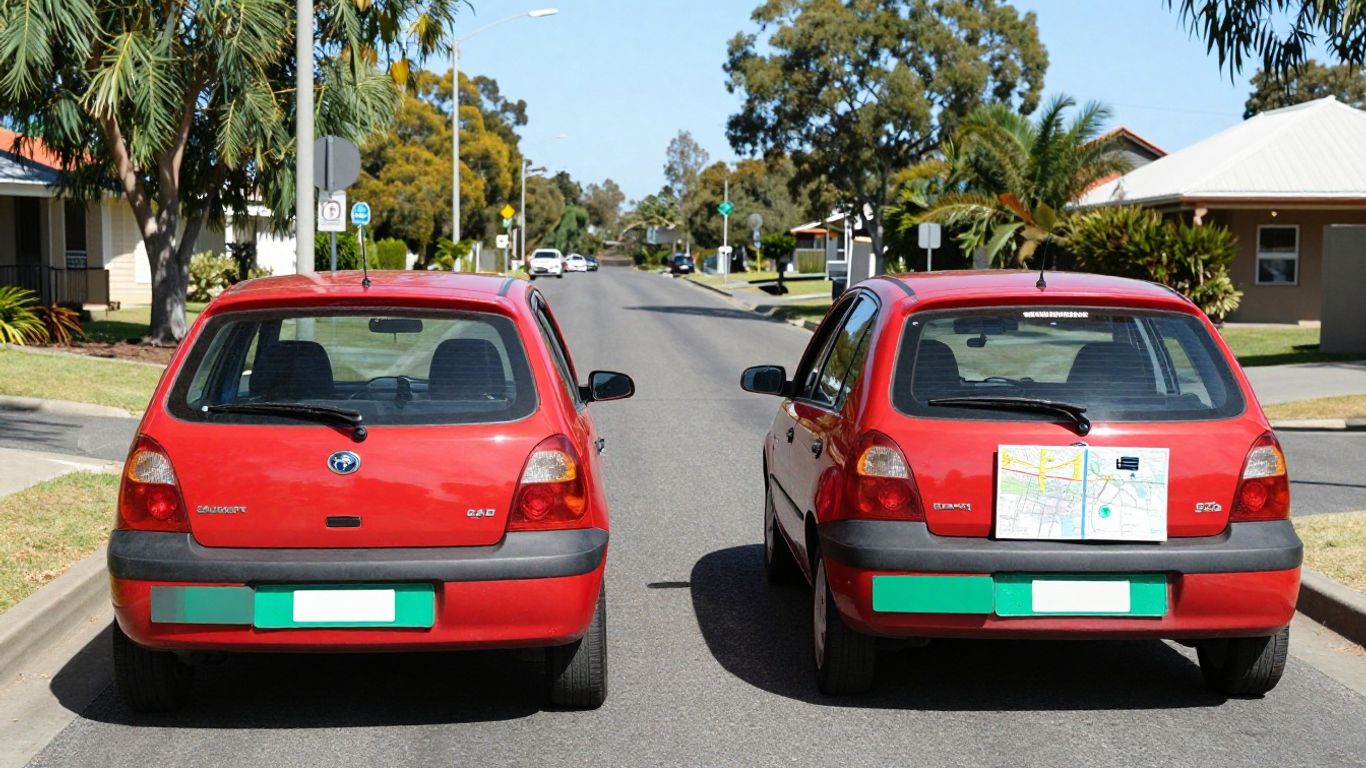
Red P plates commonly identify P1 drivers, while green P plates commonly identify P2 drivers. Some jurisdictions use different arrangements or terminology, so colour alone should not be treated as a complete guide to the licence conditions.
The plates generally need to be displayed where they can be seen by other road users and enforcement officers. The required position, number of plates and exceptions should be checked with the issuing authority, especially when using a borrowed vehicle.
When restrictions end or change
Restrictions usually change when the driver progresses from one provisional stage to another or receives an open licence. The change is not automatic merely because a driver feels experienced; eligibility can depend on time, age, recorded offences and local requirements.
A driver should confirm the change through the official licensing service before removing plates or taking advantage of a less restrictive condition. Guessing is a poor graduation ceremony.
P plate restrictions in New South Wales and Victoria
New South Wales and Victoria both use graduated licensing, but their conditions are not interchangeable. Their rules can cover passengers, speed, phones, alcohol and vehicle performance, with separate details for P1 and P2 drivers. A driver moving between Sydney and Melbourne should treat the trip as a rules check, not a memory test.
NSW rules for passengers, speed and mobile phones
In New South Wales, provisional drivers face conditions that can include passenger limits, a lower maximum speed than open-licence drivers and strict mobile-phone restrictions. P1 drivers generally face the tightest passenger and late-night conditions, while P2 drivers may have a different set of limits.
Mobile-phone rules are particularly unforgiving: holding, touching or using a phone while driving can be prohibited even when the driver believes the conversation is harmless. The current Transport for NSW guidance should be checked for exemptions and licence-stage details.
Victoria’s probationary licence conditions
Victoria’s probationary drivers must follow conditions covering P-plate display, alcohol, mobile phones and safe vehicle use. Passenger and night-driving rules can depend on the driver’s age, licence stage and circumstances, so a broad summary cannot replace the official Victorian guidance.
Victoria also applies its own approach to speed and vehicle eligibility. A driver who has recently moved from another state should not assume that a familiar P1 or P2 label carries the same meaning in Victoria.
Vehicle power and performance limits
Several jurisdictions restrict provisional drivers from using certain high-powered or high-performance vehicles. The test may involve power-to-weight calculations, listed vehicle models or an exemption process, rather than a simple impression that a car “looks fast”.
Before buying a first car, a P-plater should check the registration details and the relevant vehicle eligibility tool. That small task is far cheaper than discovering after purchase that the car cannot legally be driven on the licence.
Common penalties for breaking the rules
Breaking a provisional condition may attract an infringement notice, demerit points, a licence suspension or a court process, depending on the offence and jurisdiction. Some conduct, such as dangerous driving or serious mobile-phone use, can have consequences beyond an ordinary technical breach.
The practical lesson is simple: a P-plater should not treat a restriction as optional because other traffic appears to be doing so. Enforcement and penalty settings can change, so the current state source is the useful one.
P plate restrictions in Queensland and South Australia
Queensland and South Australia use their own provisional systems and terminology. Both expect drivers to manage the basics—plates, alcohol, phones and speed—while adding local conditions around passengers, times and vehicles. The differences are easy to miss when a driver is planning a long trip.
Queensland rules for P1 and P2 drivers
Queensland provisional drivers can face different conditions at P1 and P2 stages, including restrictions on passengers, mobile phones, high-powered vehicles and speed. Some conditions also depend on the driver’s age or the time since the licence was issued.
The Queensland Government’s licensing guidance should be checked before carrying young passengers or driving a vehicle that may fall into a restricted category. A P-plater who is unsure should resolve the question before turning the key, not at the roadside.
South Australia’s passenger and late-night limits
South Australia places particular importance on conditions affecting young provisional drivers, including passenger and late-night driving arrangements. The exact rule can depend on the driver’s age, licence stage and exemptions for work, education or family circumstances.
Those exemptions should never be assumed. If a trip falls near a restricted time or involves several young passengers, the driver should confirm the current requirement and carry any evidence that the authority says is needed.
Mobile phone and zero-alcohol requirements
Provisional drivers are generally subject to zero blood alcohol requirements, and drug-driving rules also apply. Mobile-phone restrictions are designed to prevent both physical handling and distraction, so hands-free confidence is not a substitute for checking the local rule.
A sensible car routine is to set navigation before moving, place the phone out of reach and nominate a passenger to handle urgent calls. That routine removes a surprisingly tempting argument with a buzzing rectangle.
What changes when crossing state borders
A trip from Queensland into South Australia can bring a new set of road rules, signs and enforcement practices. The driver’s licence remains important, but the road environment and local restrictions may not match the rules used at home.
The safest preparation is to identify the jurisdictions on the route and check their official road and provisional-licence information. This is especially worthwhile when the journey includes a late arrival, multiple passengers or a borrowed car.
P plate restrictions in Western Australia, Tasmania, the ACT and the Northern Territory
The smaller jurisdictions are not a single category, and distance can make mistakes more expensive. Western Australia, Tasmania, the ACT and the Northern Territory each set their own provisional conditions. Drivers should be alert to local rules rather than relying on a nationwide shorthand.
Western Australia’s restrictions for provisional drivers
Western Australian provisional drivers must observe conditions that can include P-plate display, zero alcohol, mobile-phone limits, passenger provisions and vehicle restrictions. The details can differ between provisional stages and may include special rules for younger drivers.
Long distances and regional roads do not cancel those conditions. A driver planning a trip across Western Australia should check the current Department of Transport material and account for fatigue as well as the formal licence rules.
Tasmania’s night-driving and passenger conditions
Tasmania can apply specific conditions to provisional drivers around late-night driving and passengers. The relevant limits may depend on age, licence stage and approved exemptions, so a short visit or a change of passenger can alter the answer.
A driver should check the Tasmanian rules before accepting a late lift home. A full car and a winding road are a combination that deserves more planning than a quick “everyone fits”.
ACT rules for provisional licence holders
The Australian Capital Territory has its own provisional-licence conditions, including requirements for plates, alcohol, phones and vehicle use. Passenger or time-based rules may apply according to the driver’s circumstances and licence stage.
Because the ACT borders New South Wales, local and interstate rules can become confused quickly. A driver based in Canberra should check which authority’s condition is relevant before crossing into surrounding roads and destinations.
Northern Territory requirements and local differences
Northern Territory provisional drivers must comply with local requirements that can include P-plate display, zero alcohol, mobile-phone restrictions and conditions for passengers or vehicles. The territory’s distances and road types also make trip preparation particularly important.
Drivers should use current Northern Territory Government guidance, especially when travelling outside urban areas. Licence conditions remain only one part of the job; road surfaces, wildlife and limited services require equal attention.
The restrictions that catch P-platers off guard
Most new drivers remember the plates and the alcohol rule. Fewer remember that a quiet passenger, a short late-night trip or a vehicle borrowed from a relative can still create a problem. The following pressure points deserve a deliberate check before the engine starts.
Passenger limits and unsupervised driving
A provisional licence normally allows unsupervised driving, but it does not mean the driver can carry any number of friends at any time. Passenger limits may apply particularly to P1 drivers and younger drivers, with exceptions that vary by jurisdiction.
The driver should count passengers before leaving, not after everyone has piled into the car. A supervising adult is also not automatically a universal exemption; the local rule controls.
Night-time driving curfews
Some jurisdictions restrict certain provisional drivers from driving during late-night or early-morning hours. These limits are often connected with age and licence stage, and exceptions may exist for employment, education or family responsibilities.
A driver who works a late shift should confirm the exemption process in advance. A roster, a text message and good intentions may not be enough if the authority requires a particular form of evidence.
Speed limits and high-powered vehicles
P-platers may have a lower maximum speed than fully licensed drivers, even where the posted road limit is higher. They may also be barred from vehicles classified as high-powered or high-performance.
The vehicle rule is not limited to sports cars. Modified vehicles, powerful family cars and borrowed vehicles can all require checking. The registration plate or model name is not a reliable substitute for the official eligibility information.
Mobile phones, devices and distracted driving
Mobile-phone restrictions can cover calling, texting, navigation and handling the device, with limited exceptions depending on the jurisdiction. Other distractions—smartwatches, tablets, passengers and loose objects—can also make driving less controlled.
A practical setup is to secure the phone, program the route while parked and stop safely before changing anything. The driver’s destination will still be there after a two-minute pause; the road may not offer a second chance.
Driving across state and territory borders
Interstate travel is where reasonable assumptions become unreliable. A P-plater may hold a valid licence and still need to understand the rules of the jurisdiction being visited. Planning is particularly important when the journey combines different road authorities, rental vehicles and overnight stops.
Which jurisdiction’s rules apply
Road rules generally relate to the jurisdiction in which the vehicle is being driven, while licence conditions remain attached to the driver’s licence. The interaction can be complicated, and the exact treatment may depend on the offence and the relevant legislation.
A driver should check both the issuing authority and the authority for the destination. When the two sources appear inconsistent, the road agency or licensing service can clarify the position before travel.
Interstate travel with P plates
P plates should remain displayed during an interstate trip if the driver is required to display them. The driver should also carry the licence and make sure the vehicle meets the destination’s requirements.
A route plan can include rest stops, mobile-phone arrangements, passenger checks and any border-specific information. That may sound fussy until a tired driver is trying to interpret an unfamiliar sign at night.
Rental cars and borrowed vehicles
A rental or borrowed vehicle does not remove provisional restrictions. The P-plater remains responsible for eligibility, plate display and compliance even when someone else owns the car.
Before collecting the vehicle, the driver should ask whether P plates may be attached safely, whether the vehicle is permitted for the licence stage and whether the rental agreement imposes additional conditions. The owner’s confidence is not a legal exemption.
Making sense of conflicting restrictions
When two rules appear to conflict, the driver should avoid choosing the more convenient one. The official road and licensing authorities can explain which condition applies, and written guidance is preferable to a remembered conversation.
Until the position is clear, the conservative option is sensible: do not carry restricted passengers, use a questionable vehicle or drive during a possibly prohibited period. A delayed trip is less troublesome than an avoidable infringement.
Penalties, demerit points and insurance consequences
A provisional breach can affect more than the immediate drive. Fines and demerit points may interact with the lower thresholds that apply to provisional drivers, while a serious offence can lead to suspension or court action. Insurance is a separate question and depends on the policy wording and the circumstances of the incident.
Fines and licence suspension risks
The penalty depends on what happened, where it happened and the driver’s record. A technical plate issue may be treated differently from speeding, phone use, drink driving or dangerous conduct, but none should be dismissed as harmless.
Suspension can disrupt work, study and family commitments. A driver who receives an infringement should read the notice carefully, note the response deadline and use the issuing authority’s process rather than relying on social-media advice.
Demerit points during the probationary period
Provisional drivers often have less room for error before reaching a suspension threshold. The points attached to an offence and the applicable threshold vary by jurisdiction and licence stage.
The driver should check the current demerit-point record through the relevant government service. Paying attention to the balance before a long trip is less dramatic than discovering a suspension after being stopped.
How offences can affect car insurance
An insurer may ask about the driver’s licence status, claims history and relevant offences. Cover can also depend on whether the driver was complying with the licence conditions and policy terms when an incident occurred.
This is general information, not a promise about any policy. A P-plater should read the product disclosure statement, keep the insurer informed when required and ask the insurer directly about a particular situation.
What to do after receiving a traffic infringement
The first step is to read the notice and identify the offence, date, jurisdiction and response options. The driver should not ignore it or assume that paying it has no effect on the licence record.
A useful response sequence is straightforward:
- Check the notice against the driver’s licence stage and the vehicle used.
- Record the payment, review or nomination deadline.
- Contact the issuing authority if a detail is unclear.
- Keep copies of correspondence and any supporting documents.
That process does not change the penalty, but it reduces the chance of missing an important administrative step.
A practical compliance checklist for P-platers
The best first-car habit is preparation, not bravado. Rules change, licences progress and vehicles get borrowed, so a checklist should be refreshed rather than memorised once. It also helps a new driver explain the conditions to family members who may otherwise offer well-meaning but outdated advice.
Checking your state’s current government rules
The relevant road or transport authority is the primary source for licence conditions, passenger rules, vehicle restrictions, speed limits and exemptions. A driver should check it when receiving a new licence stage and before travelling interstate.
Search results and forum comments can point towards a topic, but they may be old or written for another jurisdiction. The official page, licence information and direct enquiry service are the safer trio.
Displaying P plates correctly
The driver should use the required colour and display the plates in the required positions, keeping them visible and unobstructed. A dirty, damaged or hidden plate can create an avoidable issue even when every other rule is being followed.
Before driving, the driver can walk around the car and confirm that both the vehicle and plates are ready. This takes less time than explaining a missing rear plate beside the road.
Confirming vehicle and passenger eligibility
Before a trip, the driver should check whether the car is permitted for the licence stage and whether the planned passengers are allowed at that time. The check should include borrowed and modified vehicles, not just the first car purchased.
It is useful to confirm four practical details before leaving:
- The licence stage and any current restrictions.
- The vehicle’s power, modification and registration information.
- The number, age and relationship of passengers.
- The departure time, destination and likely border crossings.
This short review catches the problems that are easiest to overlook when everyone is already waiting in the driveway.
Keeping a glovebox-ready rules cheat sheet
A small note in the glovebox can list the issuing authority, emergency contact details, vehicle eligibility reference and the driver’s key restrictions. It should not replace current official guidance, but it can prompt a check when a trip changes unexpectedly.
The note should be updated when the driver moves from P1 to P2, changes cars or travels interstate. A first car should provide freedom, not a portable mystery novel.
Frequently Asked Questions
What are P plates for?
P plates identify a driver who has moved beyond the learner stage but has not yet obtained an unrestricted licence. They signal that additional provisional conditions apply.
Are P1 and P2 rules the same everywhere?
No. Most jurisdictions distinguish between P1 and P2, but the names, time periods and restrictions vary. The relevant state or territory authority has the controlling information.
Can a P-plater drive interstate?
Usually, a provisional driver may travel interstate, but the driver must comply with the applicable licence and road rules. The route, destination and licence stage should be checked before departure.
Can P-platers use a phone hands-free?
The answer depends on the jurisdiction and the precise type of use. Provisional drivers should check the current local rule and avoid handling a phone while driving.
Can a P-plater drive any family car?
Not necessarily. Some jurisdictions restrict high-powered or high-performance vehicles, and modified cars may need particular attention. Vehicle eligibility should be confirmed before use.
What happens if a P-plater loses demerit points?
The result depends on the offence, the number of points and the driver’s jurisdiction and licence stage. Accumulating points can lead to a warning, suspension or another licensing consequence.
Where should a P-plater check the latest rules?
The driver should use the official government road and licensing authority for the state or territory involved. That source is more reliable than old advice from friends, forums or social media.